
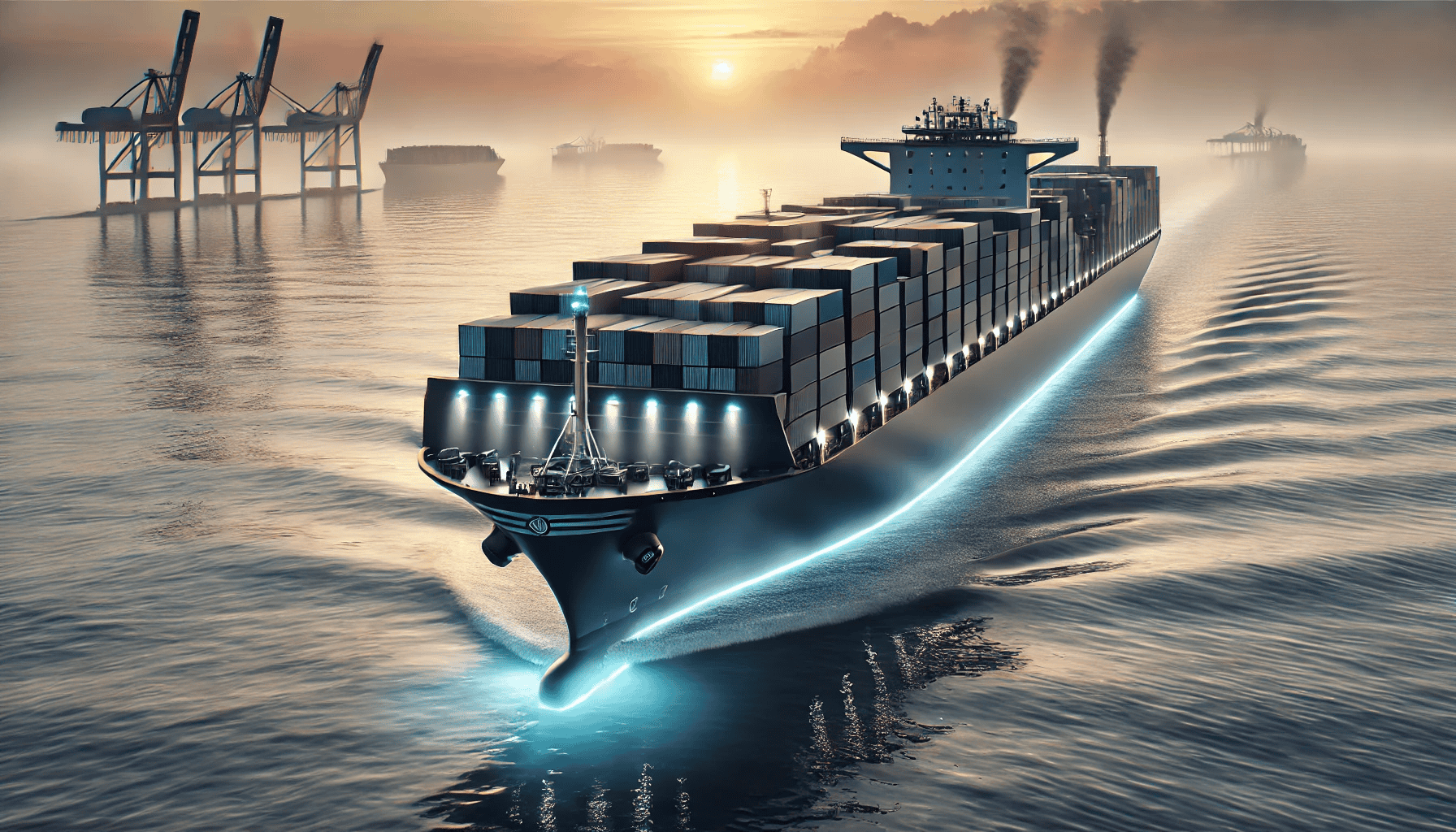
Artificial Intelligence (AI) is revolutionizing the marine shipping industry, addressing challenges related to efficiency, safety, and sustainability. By leveraging AI-driven technologies, shipping companies are modernizing operations to meet the growing demands of global trade while reducing their environmental impact.
1. Voyage Optimization
AI systems are playing a crucial role in optimizing voyages by analyzing vast amounts of data, including weather patterns, sea currents, and fuel consumption. These systems enable shipping companies to determine the most efficient routes, helping to save time, reduce fuel consumption, and minimize costs. This level of precision was previously unattainable using traditional methods.
For example, AI-powered platforms use predictive analytics to ensure vessels avoid delays caused by port congestion or adverse weather conditions. This not only improves on-time performance but also contributes to reducing greenhouse gas emissions.
2. Predictive Maintenance
AI technologies are also revolutionizing fleet management through predictive maintenance. By analyzing sensor data from ship components, AI can detect potential equipment failures before they occur. This proactive approach minimizes downtime, reduces repair costs, and enhances overall vessel reliability.
Predictive maintenance has become a cornerstone for companies seeking to extend the lifespan of their assets while maintaining operational efficiency. According to industry reports, this approach can save shipping operators millions of dollars annually by avoiding unplanned breakdowns.
3. Enhancing Navigational Safety
Safety remains a top priority in the maritime industry, and AI is helping to mitigate risks by providing real-time decision-making support. Advanced AI systems utilize data from cameras, radar, and other sensors to identify potential hazards, such as nearby vessels or obstacles.
Autonomous navigation is also gaining momentum, with AI playing a pivotal role in enabling vessels to operate with minimal human intervention. These systems ensure safer operations in challenging conditions, such as heavy fog or crowded shipping lanes.
4. Reducing Environmental Impact
As the industry strives to meet stricter environmental regulations, AI is proving to be a valuable ally. By optimizing fuel usage and enabling more efficient operations, AI helps reduce greenhouse gas emissions and complies with standards set by organizations like the International Maritime Organization (IMO).
For example, AI systems can predict the most fuel-efficient engine configurations based on current conditions. Additionally, AI-powered weather forecasting allows ships to navigate calmer waters, further reducing energy consumption.
5. Industry-Wide Adoption
Major players in the shipping industry are already leveraging AI to improve operations. One notable example is CMA CGM, which partnered with Google to implement AI solutions aimed at enhancing efficiency and reducing costs and emissions. This collaboration underscores the growing importance of AI as a competitive advantage in the maritime sector.
Other companies, including Maersk, are also investing heavily in AI-driven platforms to optimize fleet management and provide better customer service through real-time tracking and predictive logistics.
6. Future Potential of AI in Marine Shipping
The adoption of AI in marine shipping is expected to grow significantly in the coming years. As technology continues to evolve, innovations such as AI-powered digital twins—virtual models of ships and ports—are anticipated to revolutionize how the industry monitors and manages its assets.
Furthermore, AI is paving the way for the full realization of autonomous ships, which could dramatically reduce crew requirements, improve safety, and lower operational costs. While regulatory and technical challenges remain, the industry is steadily moving toward this transformative vision.
Conclusion
Artificial Intelligence is no longer a futuristic concept for the marine shipping industry—it is a reality driving meaningful change today. By optimizing operations, enhancing safety, and supporting environmental sustainability, AI is reshaping how goods are transported across the globe.
As the industry continues to innovate, the integration of AI will not only improve efficiency but also help marine shipping companies meet the demands of a rapidly changing world.
Moving The Sea With Us!
Contact us today: +351 265 544 370 or go to Contacts Page
Email: sales@partyard.eu
#ArtificialIntelligence #MarineShipping #SmartShipping #AIInMaritime #SustainableShipping #MaritimeInnovation #PredictiveMaintenance #VoyageOptimization #GreenShipping #AutonomousShips #MaritimeTechnology #GlobalTrade #FutureOfShipping #EnvironmentalSustainability #ShippingEfficiency

